





Osteoarthritis is the most common type of knee arthritis.
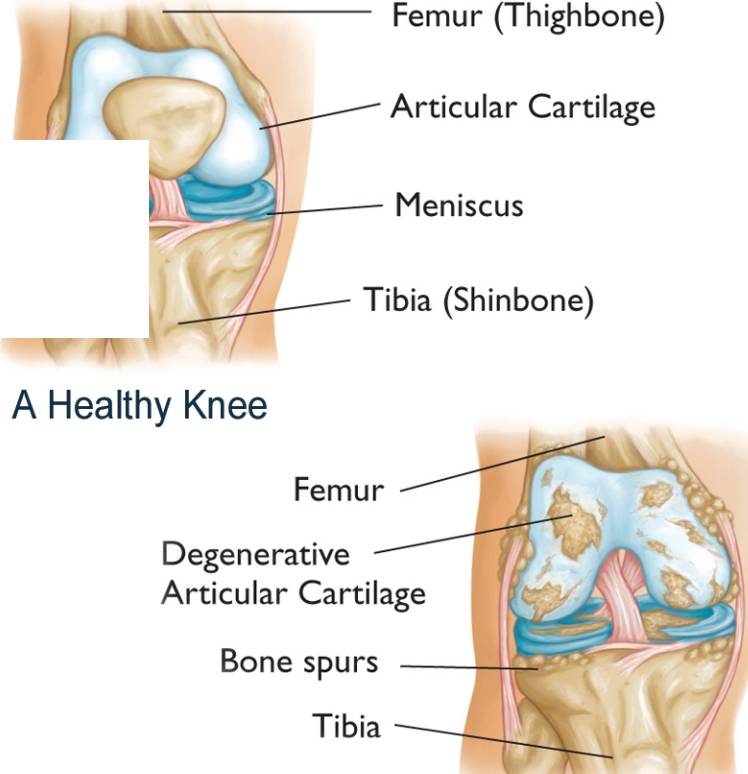
A healthy knee bends and straightens because of a smooth, slippery tissue called articular cartilage. This substance covers protects and cushions the ends of the leg bones that form your knee.
Between your bones, two c-shaped pieces of meniscal cartilage act as “shock absorbers” to cushion your knee joint. Osteoarthritis causes cartilage to wear away.
How it happens. Osteoarthritis occurs over time. When the cartilage wears away it becomes frayed and rough. Moving the bone along this exposed section is painful. If the cartilage wears away completely, it can result in bone rubbing on bone.
To compensate for the lost cartilage damaged bones may start to bow outward and form painful spurs.
Symptoms. Pain and stiffness are the most common symptoms of knee osteoarthritis. Symptoms tend to be worse in the morning or after a period of inactivity.
Many factors increase your risk for developing osteoarthritis.
- Age. The ability of cartilage to heal itself decreases as we age. Osteoarthritis typically affects people middle-aged and older.
- Heredity. Certain genes have been linked to osteoarthritis. Inherited traits, such as being bowlegged, knock-kneed, or double-jointed, can also put you at greater risk for the disease.
- Weight. The more you weigh, the more stress you put on your knee joints.
- Injury. Previous knee injury, such as a sports injury, can lead to osteoarthritis later in life.
- Overuse. People in occupations that involve repeated kneeling or squatting, or heavy lifting and walking, are vulnerable to repetitive stress injuries in the knee. This makes them more likely to develop osteoarthritis.
- Other illnesses. If you have had other problems with your knee, such as gout, knee infection, or Lyme’s disease, your risk for osteoarthritis increases.
Supartz was the first type of natural knee injection approved by the FDA in 2001.
Viscosupplementation therapy is a procedure involving the injection of gel-like substances (hyaluronates) into a joint to supplement the viscous properties of synovial fluid. This procedure has been shown to be highly successful in alleviating pain associated with osteoarthritis and is covered by most major medical insurance providers, including Medicare.
At our facility, we have elected to utilize Supartz and Genvisc as our injectable of choice for our viscosupplementation therapy program.
We also utilize a breakthrough piece of medical equipment at our facility called fluoroscopy. This is a very important point because fluoroscopy allows our medical staff to look inside your joints in real-time with the latest imaging technology while administering any of our minimally invasive injection procedures. This instrument helps to ensure that the injected material is introduced to the exact point intended and therefore provides the best possible outcome from each injection. That’s why if you have tried any type of pain reduction injection elsewhere without success we may still be able to assist you as your original injection may have never wound up in just the right place.
- Do you wake up with stiff knees?
- Do your knees hurt when going up or downstairs?
- Do you frequently take medication for knee pain?
- Do activities you enjoy cause pain around the knees?
- Have you been told you need knee replacement surgery?
If you answered YES to any of these questions, you may suffer from Osteoarthritis of the Knee. Call our office to schedule your complimentary consultation.
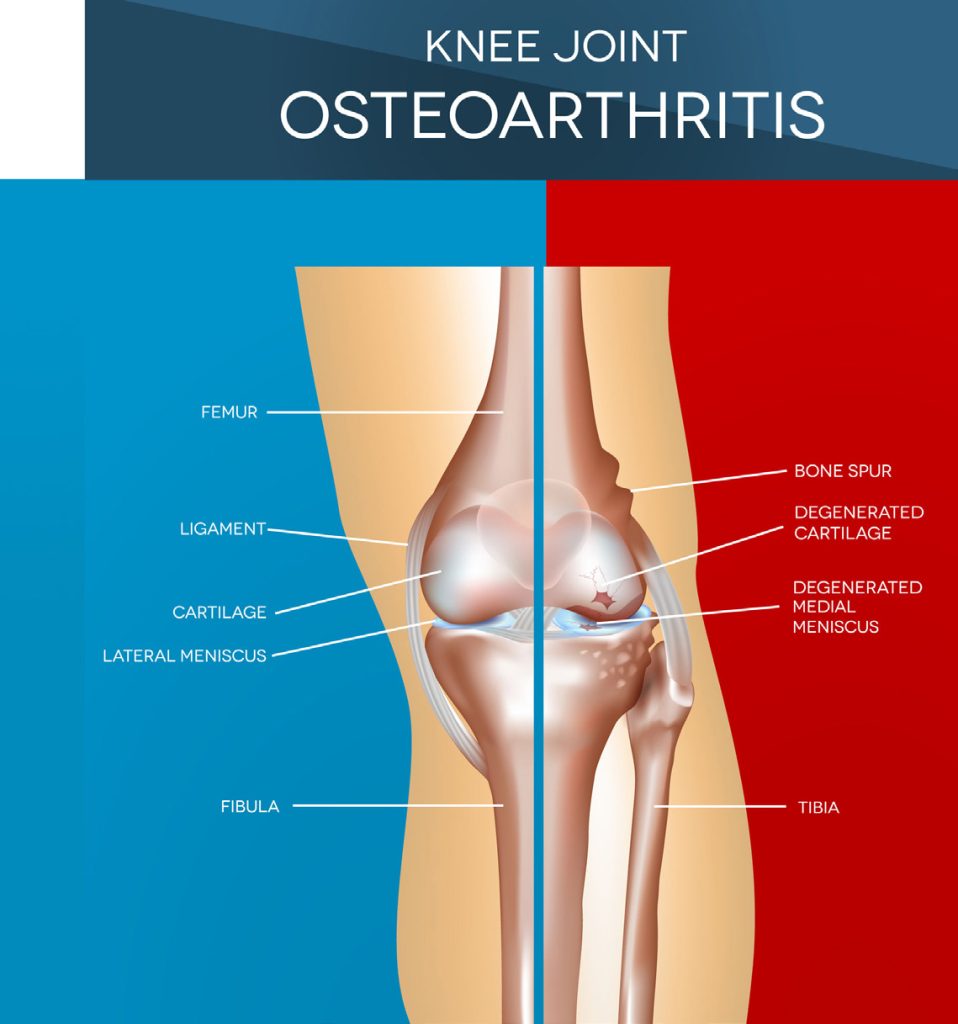
Osteoarthritis occurs over time. When the cartilage wears away it becomes frayed and rough. Moving the bone along this exposed section is painful. If the cartilage wears away completely, it can result in bone rubbing on bone. As the cartilage continues to wear away, damaged bones may start to bow inward or outward, forming spurs and causing more pain.
Osteoarthritis is the most common type of knee arthritis
Pain and stiffness are the most common symptoms of knee osteoarthritis.
Symptoms tend to be worse in the morning or after a period of inactivity.
Many factors increase your risk of developing OA
- Age. The ability of cartilage to heal itself decreases as we age. Osteoarthritis typically affects people middle-aged and older.
- Injury. Previous knee injury, such as a sports injury, can lead to osteoarthritis later in life.
- Heredity. Certain genes have been linked to OA.
- Weight. The more you weigh, the more stress you put on your knee joints.
- Overuse. People in occupations that involve repeated kneeling or squatting, heavy lifting and walking, are vulnerable to repetitive stress injuries in the knee.
- Other illnesses. If you have had other problems with your knee, such as gout, knee infection or Lyme disease, your risk for osteoarthritis increases.